115 Years of History
The Story of Tally Ho
Designed by Albert Strange. Built in 1910. Winner of the 1927 Fastnet Race. Shipwrecked, forgotten, found, and rebuilt. Now sailing home.
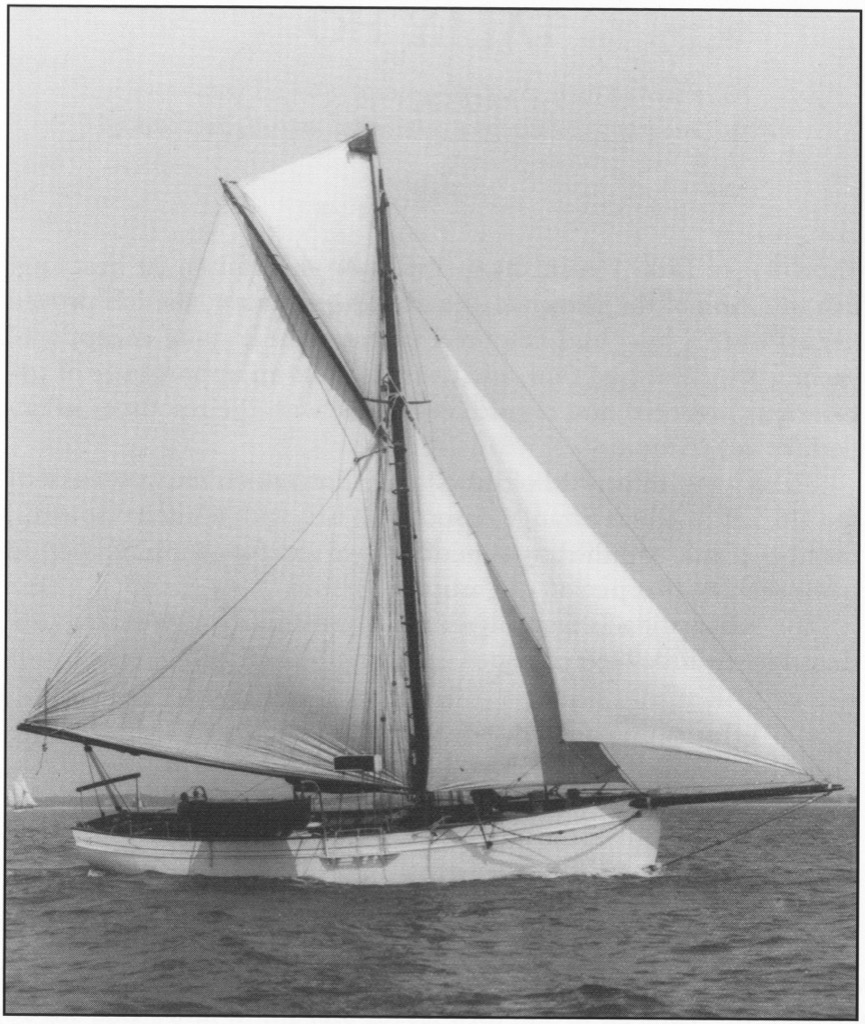
1909–1910
Designed and Built
Albert Strange designs a 48-foot gaff cutter for Charles Hellyer of Brixham — at 47ft 6in LOA and 30 tons TM, the largest transom-sterned boat Strange ever drew. Hellyer owned one of the first steam trawler fleets and required a yacht in which he could ‘cruise in comfort whilst indulging in deep-sea fishing.’ Built by Stow & Sons at Shoreham, Sussex to Lloyd’s highest class, and originally named Betty. The hull was planked in American elm below the waterline with teak above.
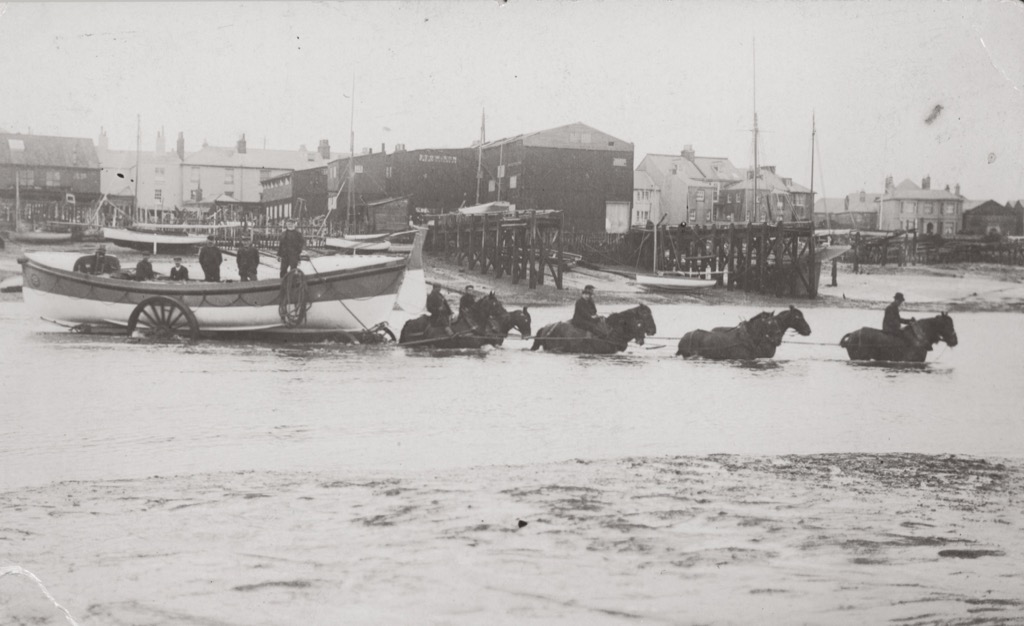
The Stow and Sons yard at Shoreham, where Tally Ho was built in 1910
1913
Sold by Hellyer
When Hellyer commissioned Strange to design the larger Betty II (50ft waterline) in 1913, Betty was sold. She passed through two more owners before 1927.
1927
Fastnet Victory
Under Lord Stalbridge’s ownership and renamed Tally Ho, she wins the Fastnet Race in storm conditions — one of only two finishers from fifteen starters. The photograph by Beken of Cowes shows her at this period under racing canvas, with the pole mast changed to a taller fidded topmast rig and sail area increased by some 400 sq ft. Alf Loomis, crewing on the rival Alden schooner La Goleta, wrote: “At the time, this contest between Tally Ho and La Goleta was characterised as the hardest fight between two yachts that had ever been sailed in English waters over so long a course and under such heavy weather conditions.”
Tally Ho under full sail with her original rig, 1926
The 1927 Fastnet Race
“High though the seas rose, she seemed as steady
as a church, and we watched her in silent admiration.”
— Alf Loomis, navigator aboard La Goleta
The summer of 1927 in England was appalling with storms, floods and generally unsettled weather. There were such regular gales that on the eve of the third Fastnet Race there was talk of a possible postponement. Fifteen yachts came to the line: Jolie Brise, La Goleta, Saoirse, Nicanor, Morwenna, Shira, Content, Maitenes, Spica, Nellie, Thalassa — and Tally Ho.
Lord Stalbridge’s crew consisted of his son Hugh Grosvenor, Mr Peter Bathurst, and paid hands Mark Spinks, Jim Wills, and Lou Springett. Strong winds and rain hit the fleet shortly after the start. Over the next two days beating down Channel, most of the fifteen starters were forced to retire with split mainsails, unreliable compasses, or crew who jumped ship. By the 16th of August only La Goleta, Tally Ho, and Nicanor remained at sea.
Rounding the Fastnet Rock at 1.20am some quarter of a mile ahead of La Goleta, Tally Ho drove hard back to Plymouth, often within sight of her rival. La Goleta crossed the finishing line at 1.40pm on August 19th, followed by Tally Ho some 50 minutes later — but Tally Ho’s handicap meant her time was adjusted by nearly four hours. She won the Fastnet Cup.
“Knowing from the experiences in a gale in the Bay of Biscay what a wonderful sea-boat Tally Ho was, and also confident in our sails and gear, we thought that by reefing her down and making things shipshape, we might be able to weather the Lizard — and if so would catch the tide and be a tide ahead of any of our competitors who failed to do so.”
— Lord Stalbridge, owner of Tally Ho
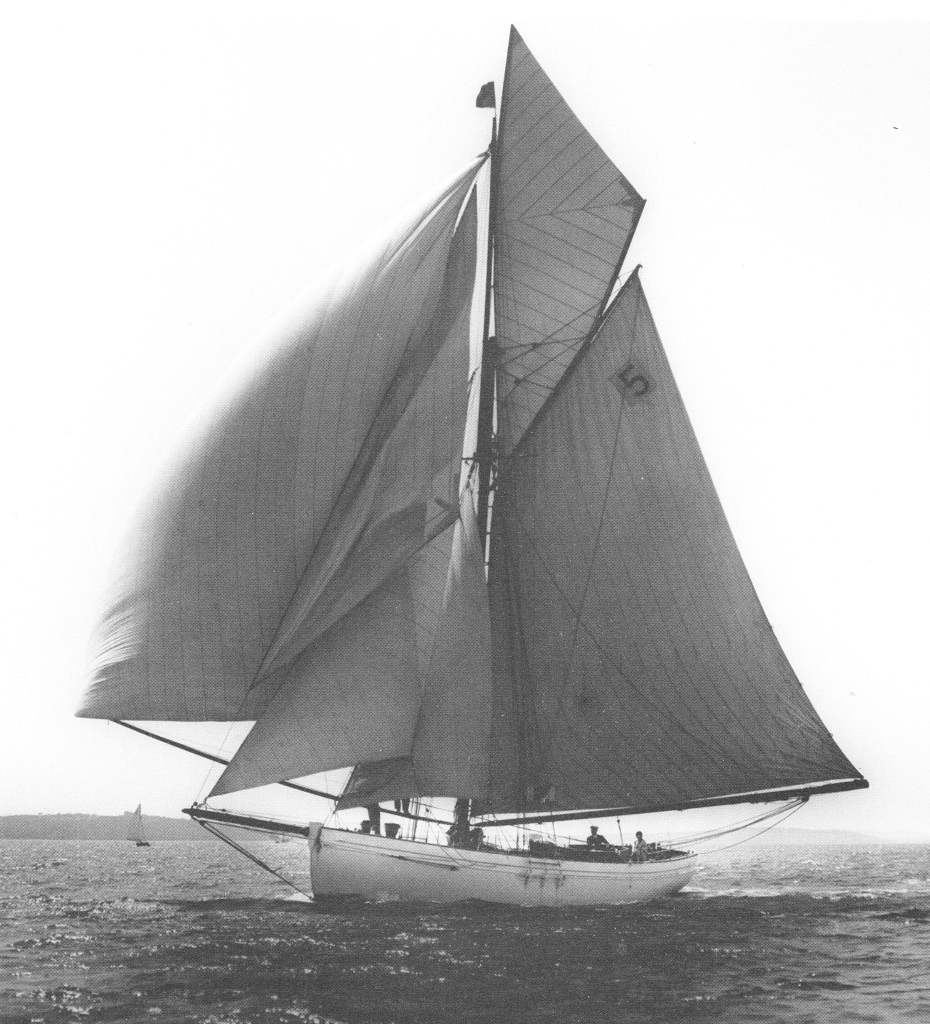
Tally Ho with fidded topmast and spinnaker, Beken of Cowes, 1927 — the year she won the Fastnet
1930s–1950s
Cruising Years
Based in Southampton. Multiple transatlantic crossings. The Clark family takes her on a year-long transatlantic cruise in 1958, one of several trans-Atlantic trips she made after the Second World War.
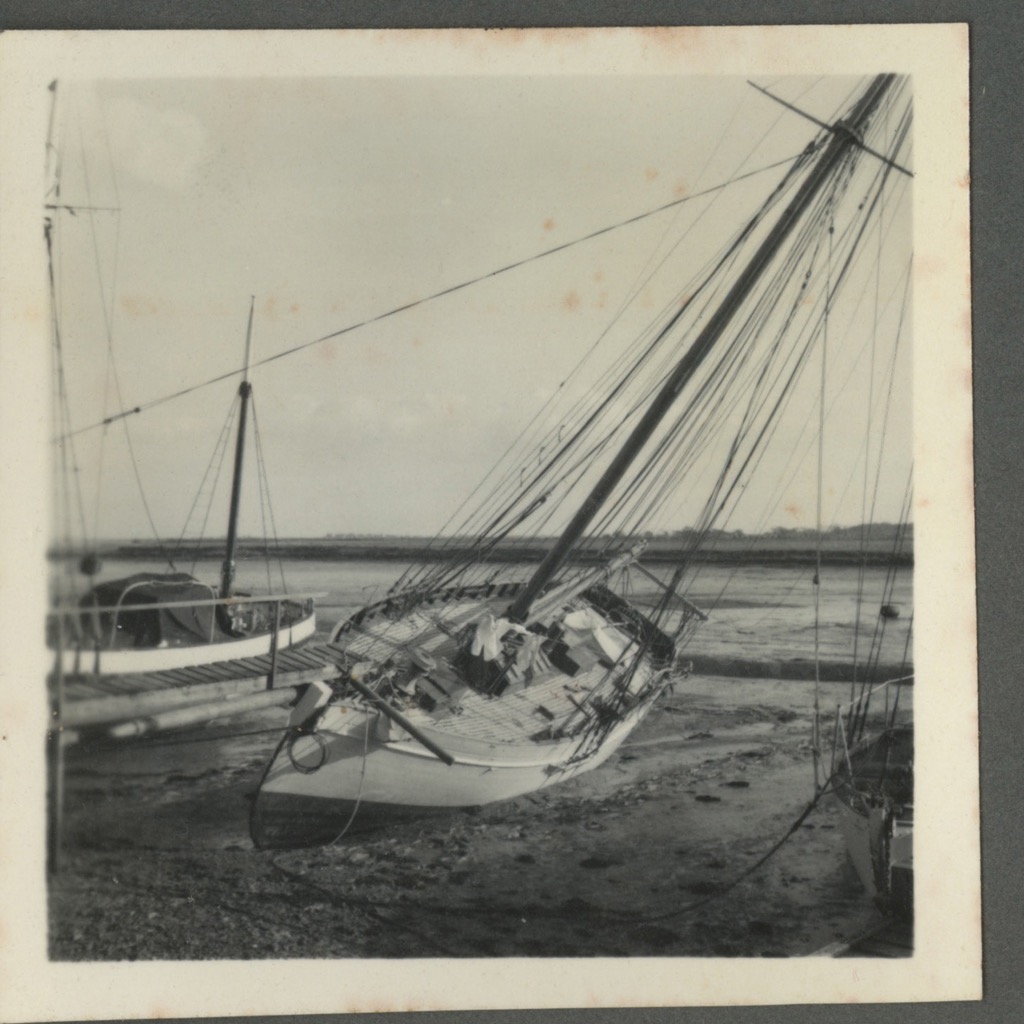
Tally Ho in a drying berth in the 1950s
1967
Voyage to New Zealand
New Zealander Jim Loudon sets out in Tally Ho from England heading home via the Panama Canal. He pauses to charter for a few months in the Caribbean, then sails single-handed to Rarotonga in the Pacific, which he reaches in July 1968. There he accepts a charter to fetch 20 tons of copra from the island of Manuae, 120 miles to the northeast.
1968
Shipwrecked at Manuae
Heaving-to at Manuae waiting for dawn, the current carries Tally Ho down onto the coral reef, staving in her port side. She is eventually dragged off after seven tons of lead ballast are removed and the cabin filled with empty oil drums. As she comes off, she rolls over and is dismasted, also losing her rudder and bowsprit. But the drums keep her floating just awash, and in that condition she is towed 120 miles back to Rarotonga — something of a tribute to the strength of her original deck construction.
1970s–1987
Fishing Boat in Oregon
Rebuilt in Rarotonga and eventually making her way via Tahiti and Hawaii to the west coast of the United States, she goes to work under the name Escape — fishing for tuna and salmon out of Brookings Harbor, Oregon. During this ownership, Dave Olson sails some 20,000 miles in her over ten years: twice to the Marquesas, Tahiti, Hawaii, even Pitcairn. At this time she is still in remarkably good condition for a boat of her age.
2008–2017
On the Hard
When Olson moves on, no new owner can be found and Tally Ho languishes in Brookings Harbor. In 2008 she is sold at auction to local artist and shipwright Manuel Lopez, who forms a charitable foundation and does significant work on the boat — but dies in early 2010 without addressing the structural issues. By 2012 the Port is preparing to foreclose and there is a real danger she will be broken up. The Albert Strange Association steps up, takes ownership, and embarks on a campaign to raise awareness of her desperate situation. It is through their efforts that Leo becomes aware of the boat.
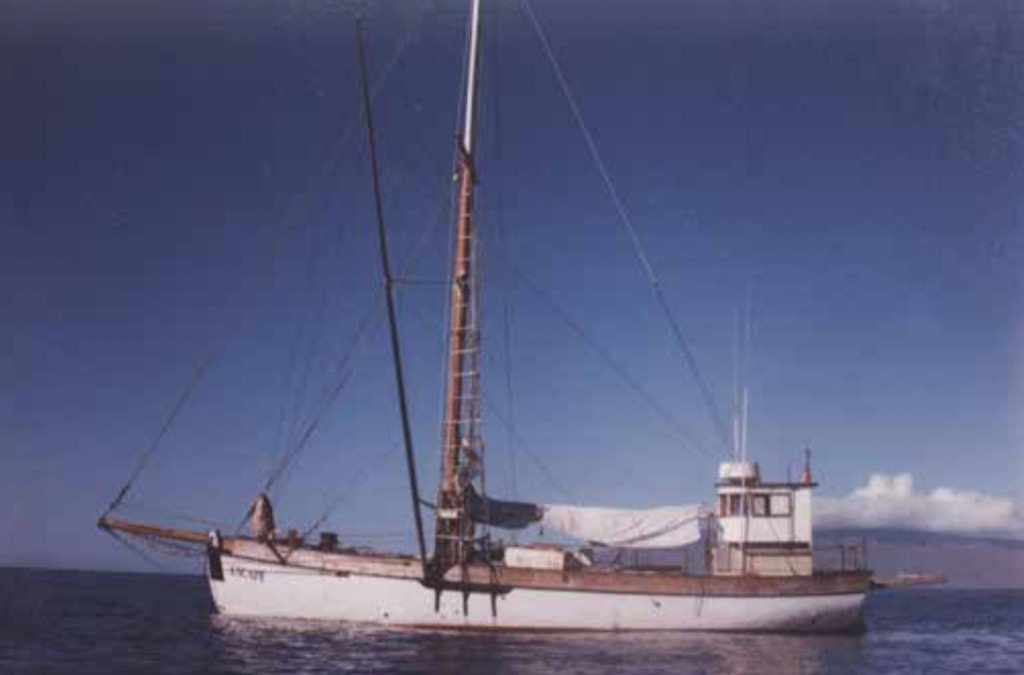
Tally Ho deteriorating on the hard in Brookings Harbor
2017
Rescued by Leo
Leo Sampson Goolden buys Tally Ho from the Albert Strange Association for $1 and moves her 600 miles to Sequim, Washington, on the Olympic Peninsula, to begin the rebuild. A few people suggested it might have been simpler to build a new boat — and they’d have been right. But this was about saving a historic vessel from destruction. About making a good story. About the magic of sailing a very old boat.
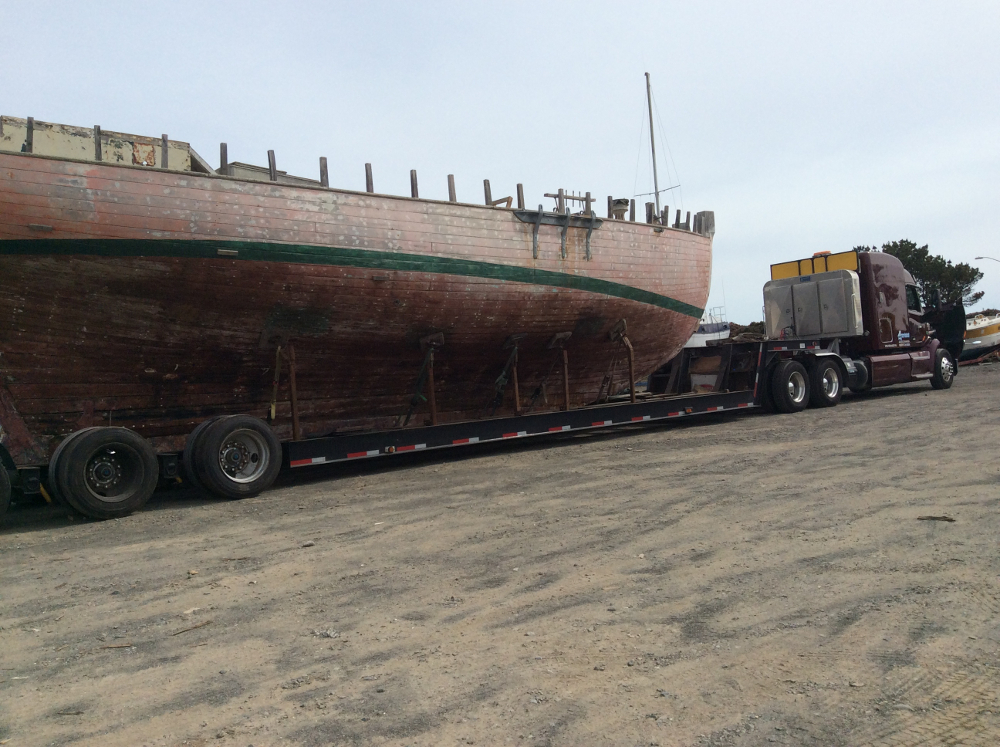
Tally Ho on the low loader, being moved to Sequim, Washington
2017–2024
The Rebuild
Seven years of work, documented in 200+ YouTube episodes. New keel, frames, planking, deck, rig — rebuilt from the ground up with traditional methods and modern care. Friends, volunteers, and skilled craftspeople all became part of the story. The rebuild was funded entirely by the community that grew around the videos.
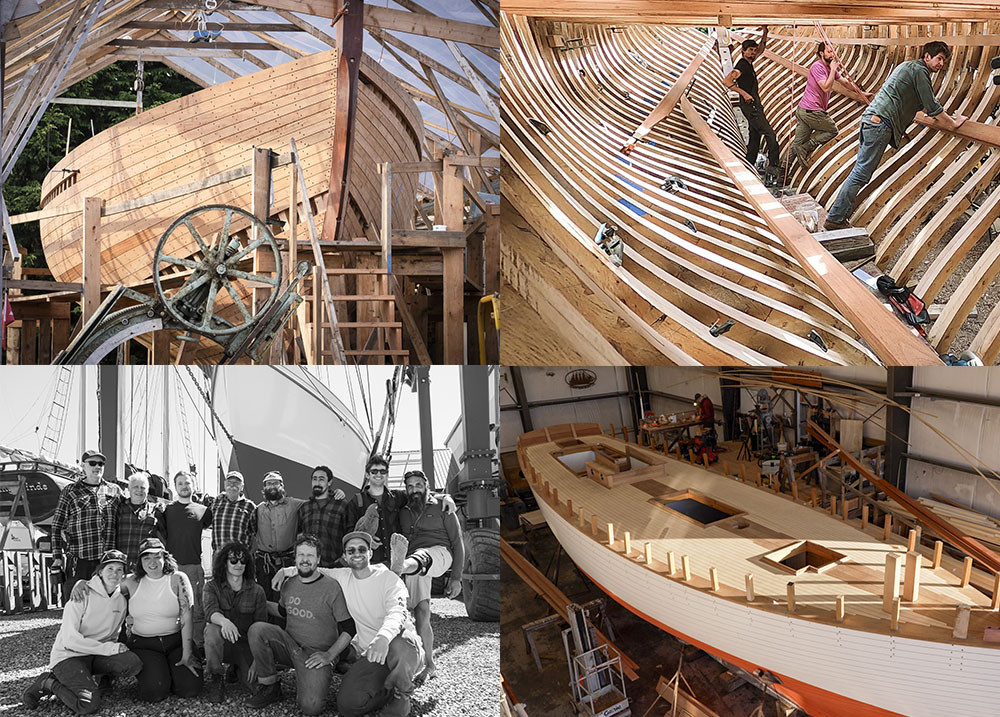
The incredible community that made the rebuild possible
April 2024
Launch Day
Tally Ho touches water for the first time since the 1990s. Thousands of supporters watch the live stream. She floats perfectly on her lines.
Launch day — seven years in the making
June 2024
First Sail
Under her full set of five sails, Tally Ho sails in the open water of Port Townsend Bay for the first time. The gaff rig works beautifully.
2024–2026
The Voyage South
Down the Pacific coast — Oregon, California, Mexico, Central America. Through the Panama Canal in February 2026 and into the Caribbean. Since Leo found Tally Ho as a wreck in the Pacific Northwest, the dream has always been to sail her back to the Fastnet Race. There is still a long way to go.
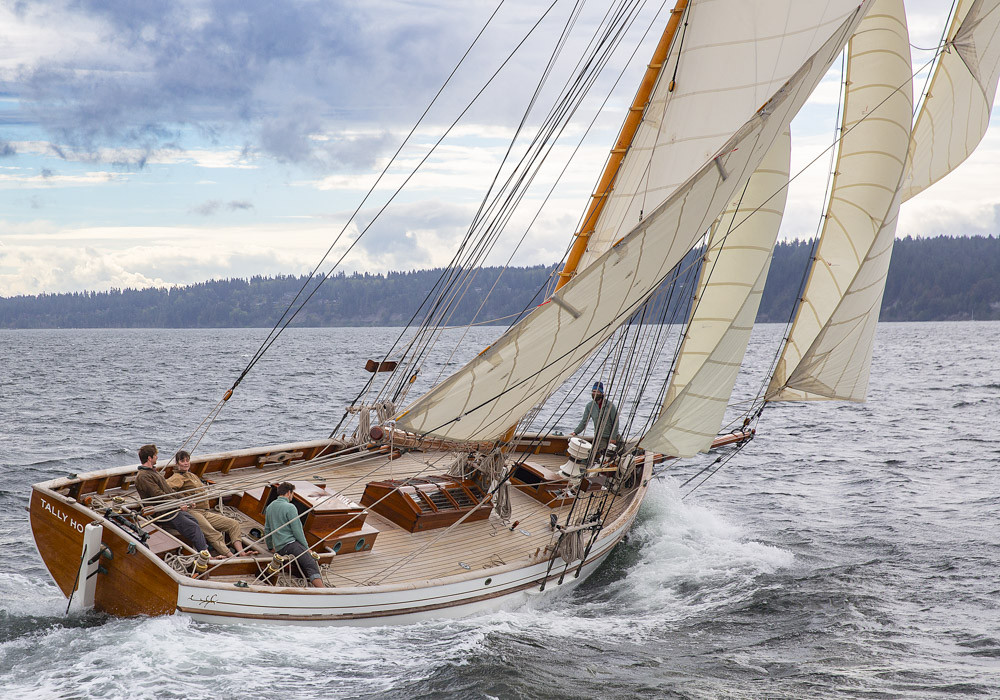
Tally Ho at sea — the voyage south
2026–2027
Atlantic Crossing
The planned route: through the Windward Islands, north to Bermuda and New England, then the great Atlantic crossing to the UK. This voyage spans 14,000 miles of changing climates, cultures, and challenges.
August 2027
The Fastnet Race
The goal: arrive in the UK in time to enter the 2027 Fastnet Race — the centenary of Tally Ho’s original victory in 1927.
Tally Ho with fidded topmast and spinnaker, 1927 — the year she won the Fastnet
The Designer
Albert Strange (1855–1917)
Albert Strange was one of the foremost designers of small cruising yachts. His boats are now considered true classics and are still sought after all over the world. His designs and writings contributed significantly to the evolution of the seaworthy cruising yacht.
He had a lifelong career in art, exhibiting many times at the Royal Academy, and turned to yacht design as an activity complementary to his love of small boat sailing. A keen sailor from a very young age, Strange made a number of noteworthy single-handed trips along the east coast of England — all of which he recorded in prose, drawings, and paintings.
Strange designed some 150 craft of varying size and style, and his work has been admired and respected by yachtsmen for more than a hundred years. Among his friends was the most respected of English yachtsmen, Claud Worth, for whom he drew up the lines of Tern III.
The experience he gained afloat lent great authority to his output as artist, writer, and yacht designer. His original design drawings are held at Mystic Seaport Museum in the collected papers of W. P. Stevens, the American yachtsman and writer.
Vessel Specifications
Tally Ho — Technical Details
Albert Strange gaff cutter, 1910 · Rebuilt 2017–2024